REGULATORY
Who Pays to Clean Our Water?
Australia opens a fresh debate on water safety standards as utilities demand more accountability for chemical pollution
31 Mar 2026
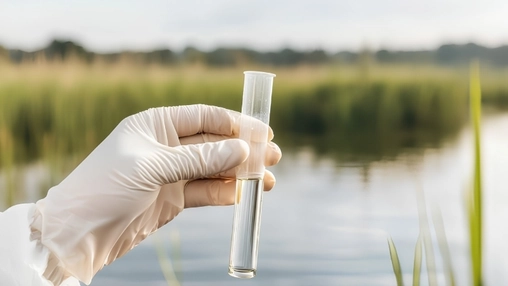
Australia's war on "forever chemicals" is far from over. On April 1, 2026, the National Health and Medical Research Council opened another round of public consultation on the Australian Drinking Water Guidelines, proposing fresh updates to its PFAS chemical fact sheet and new guidance on metals leaching from plumbing products. Submissions close June 5.
The process builds on a landmark shift from June 2025, when the NHMRC slashed health-based guideline values for key PFAS compounds. PFOS, one of the most scrutinized substances, was set at just 8 nanograms per liter, a steep drop from the 2017 benchmark. Most Australian water supplies currently meet those revised thresholds. But the April 2026 consultation signals that regulators see the 2025 revisions as a floor, not a ceiling.
For water utilities, that distinction matters enormously. The Water Services Association of Australia, responding to proposed Industrial Chemicals Environmental Management Standard settings, has urged regulators to spell out exactly how persistent chemicals travel through wastewater systems, sewer networks, landfill leachate, biosolids, and recycled water pathways. Their core argument: utilities shouldn't bear indefinite treatment obligations for chemicals introduced upstream by industries over which they had no control.
It's a practical concern with a real price tag. Granular activated carbon, anion exchange resins, and reverse osmosis are the advanced treatment options capable of hitting the new PFAS thresholds, and all require significant capital investment. Each also generates contaminated residuals that require separate management. The association is pushing for nationally consistent implementation pathways and shared accountability across Commonwealth, state, and territory regulators.
How the April consultation resolves will shape how federal guidance becomes enforceable law at the state level. For treatment operators, source control and infrastructure planning are no longer separate conversations.
Related News


topics on the agenda
THE VALUE OF EFFECTIVE DECENTRALISED WATER RECYCLING
Day 1: MONDAY, 7 DECEMBER, 2026
12:00 - 12:25
DIGITAL TRANSFORMATION AND AI IN WATER TREATMENT OPERATIONS
Day 1: MONDAY, 7 DECEMBER, 2026
14:00 - 14:25
ADVANCES IN PFAS CAPTURE AND DISPOSAL IN LANDFILL AND SEWAGE TREATMENT FACILITIES
Day 1: MONDAY, 7 DECEMBER, 2026
14:30 - 14:55
SUBSCRIBE FOR UPDATES
By submitting, you agree to receive email communications from the event organizers, including upcoming promotions and discounted tickets, news, and access to related events.