TECHNOLOGY
Smart Meters Meet AI in a New Water Era
Australia’s water sector is betting $2.4 billion on AI and smart meters to combat rising costs and a mounting leakage crisis by 2036
11 Mar 2026
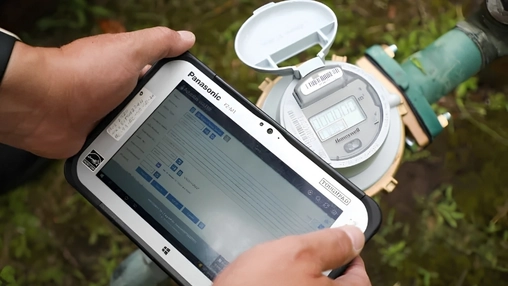
Australia's water utilities are accelerating a structural shift toward digital infrastructure, with spending on artificial intelligence, smart metering, and predictive network monitoring projected to more than double over the next decade. A March 2026 report from Bluefield Research forecasts total expenditure rising from US$958.6 million in 2026 to US$2.4 billion by 2036, a compound annual growth rate of 9.6 percent. The findings, analysts said, place Australia among the most advanced digital water markets in the world.
The push comes amid intensifying operational strain. Non-revenue water losses at major urban utilities have climbed 25 percent over the past five years, while capital expenditure across the sector has risen 83 percent over the past decade. In response, larger utilities are layering AI capabilities onto existing systems such as SCADA and geographic information platforms, moving away from reactive maintenance toward data-driven, predictive management. Bluefield Research characterized the investment trajectory as structural necessity rather than discretionary spending.
Smart metering has emerged as the sector's most visible expression of that transition. Sydney Water and South East Water have committed to full-scale rollouts covering nearly 30 percent of the national population. Fifteen of the country's top 20 utilities are running active pilot programs that together reach a further 46 percent of Australians. South East Water's A$272 million, six-year deployment, the largest of its kind in the country, is generating high-resolution consumption data used for real-time leak detection, asset performance monitoring, and demand forecasting. Customer engagement software tied to these programs is expanding at a 23.7 percent compound annual growth rate as utilities use live data to strengthen public trust alongside operational efficiency.
Yet the transition carries unresolved risks, according to Bluefield Research. Integrating AI tools into aging infrastructure, securing increasingly networked systems against cyber threats, and retraining operational workforces are challenges most utilities are only beginning to address at scale.
Australia's position as a reference market for digital water investment was shaped by the Millennium Drought and refined through two subsequent decades of infrastructure reform. The current wave of AI-assisted transformation builds on that foundation with a speed and ambition the sector has not previously seen, and the choices utilities make now could inform water governance far beyond Australia's borders.
Related News


topics on the agenda
THE VALUE OF EFFECTIVE DECENTRALISED WATER RECYCLING
Day 1: MONDAY, 7 DECEMBER, 2026
12:00 - 12:25
DIGITAL TRANSFORMATION AND AI IN WATER TREATMENT OPERATIONS
Day 1: MONDAY, 7 DECEMBER, 2026
14:00 - 14:25
ADVANCES IN PFAS CAPTURE AND DISPOSAL IN LANDFILL AND SEWAGE TREATMENT FACILITIES
Day 1: MONDAY, 7 DECEMBER, 2026
14:30 - 14:55
SUBSCRIBE FOR UPDATES
By submitting, you agree to receive email communications from the event organizers, including upcoming promotions and discounted tickets, news, and access to related events.