INNOVATION
How Nano-Cages Are Cleaning Our Drinking Water
Flinders University researchers debut a nano-cage filter that captures 98% of stubborn PFAS, offering a new shield for our drinking water
28 Feb 2026
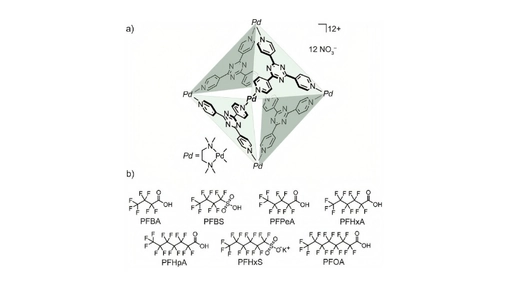
For decades, a particularly slippery class of "forever chemicals" has been outsmarting water treatment plants. Short-chain PFAS compounds move fast through filtration media, shrug off activated carbon, and end up in drinking water anyway. A team at Flinders University may have finally caught up with them.
Published in Angewandte Chemie International Edition, their findings describe a filter material that removes up to 98 percent of per- and polyfluoroalkyl substances from drinking water, including short-chain variants that conventional systems routinely miss.
Nano-sized molecular cages embedded into mesoporous silica sit at the heart of this approach. Silica alone has no PFAS-binding ability whatsoever, but cage structures force short-chain PFAS molecules to cluster inside their cavities, trapping them through a binding mechanism fundamentally different from anything currently used at water treatment plants. It is a precise molecular ambush.
Led by ARC Fellow Dr. Witold Bloch, his team found the material held up across at least five reuse cycles without meaningful loss of performance. Durability matters as much as removal rate. A filter that degrades quickly is a cost problem. One that holds up is an infrastructure solution.
Designed as a final polishing step, this technology layers onto existing treatment systems rather than replacing them. For utilities managing aging infrastructure and tight budgets, that compatibility is significant. Adoption does not require a ground-up rebuild.
Stakes in Australia are real. PFAS contamination, much of it traced to firefighting foam used near military and industrial sites, has driven years of regulatory pressure and community concern. Until now, treatment options capable of capturing the full PFAS spectrum have been limited, and largely imported. Pilot and full-scale testing will determine how quickly this moves from lab to operational use, but the direction is clear.
Related News


topics on the agenda
THE VALUE OF EFFECTIVE DECENTRALISED WATER RECYCLING
Day 1: MONDAY, 7 DECEMBER, 2026
12:00 - 12:25
DIGITAL TRANSFORMATION AND AI IN WATER TREATMENT OPERATIONS
Day 1: MONDAY, 7 DECEMBER, 2026
14:00 - 14:25
ADVANCES IN PFAS CAPTURE AND DISPOSAL IN LANDFILL AND SEWAGE TREATMENT FACILITIES
Day 1: MONDAY, 7 DECEMBER, 2026
14:30 - 14:55
SUBSCRIBE FOR UPDATES
By submitting, you agree to receive email communications from the event organizers, including upcoming promotions and discounted tickets, news, and access to related events.